
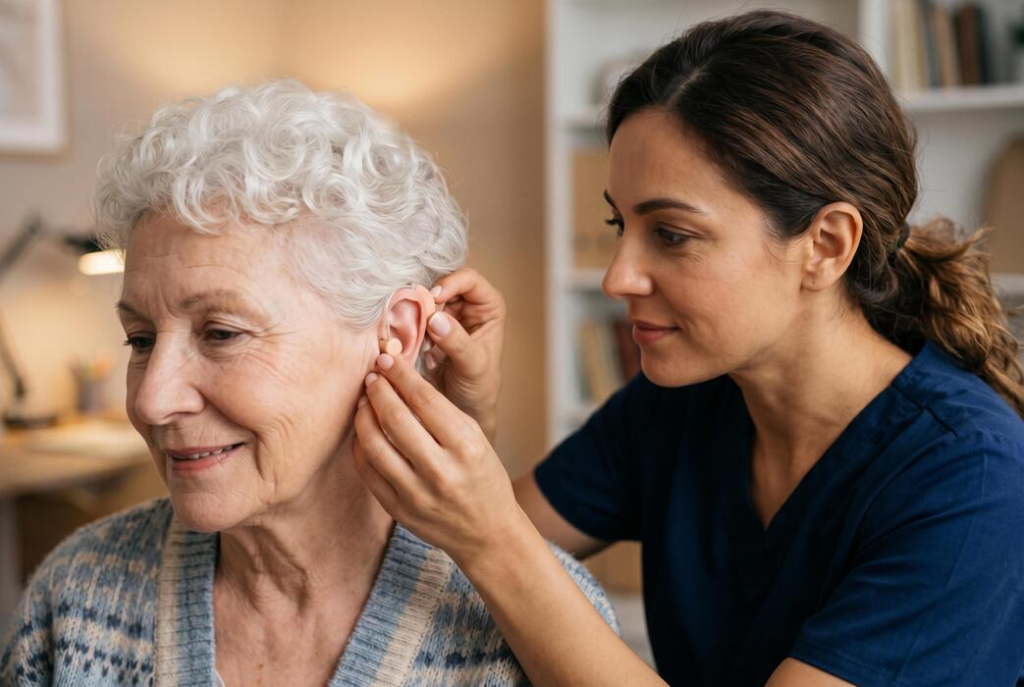
Quick Answer: “Home care can support seniors with hearing loss by making daily communication clearer, helping with appointments and errands, providing companionship, maintaining familiar routines, and reducing isolation. A caregiver can adapt how they communicate and provide practical daily support while hearing evaluations, hearing aids, and medical treatment remain the responsibility of hearing-care professionals.”
Hearing loss can quietly change a senior’s daily life. Conversations become harder to follow. Phone calls may feel frustrating. Appointments can become confusing. Social gatherings may feel exhausting instead of enjoyable.
Over time, some older adults begin avoiding situations where they struggle to hear. The result can be less conversation, fewer outings, and growing dependence on family members.
Professional home care can provide practical support without treating hearing loss as a medical condition. SeniorCare Companions provides hourly and live-in home care on Long Island that includes companionship, appointment assistance, grocery shopping and errands, meal support, personal hygiene guidance, household tasks, and help with daily routines.
What Problems Can Hearing Loss Create for Older Adults at Home?
Age-related hearing loss often develops gradually. A senior may ask people to repeat themselves, increase the television volume, struggle with telephone conversations, or find group discussions difficult. They may also miss sounds such as a telephone, alarm, or doorbell.
These changes can affect much more than conversation.
Families may notice a loved one:
- Avoiding telephone calls
- Withdrawing during family conversations
- Misunderstanding instructions
- Becoming frustrated in noisy places
- Skipping social activities
- Appearing less responsive when spoken to
- Feeling nervous about appointments
- Depending on relatives to communicate with other people
A senior may appear distracted or confused when the real problem is that they did not hear the conversation clearly. That is one reason hearing concerns deserve attention rather than being dismissed as a normal part of aging.
Clear Communication Makes Daily Care Easier
The way people communicate with a senior who has hearing loss matters. Speaking louder from another room usually does not solve the problem.
Simple changes can make conversations easier.
Helpful communication practices include:
- Getting the senior’s attention before speaking
- Facing them during conversation
- Making sure the speaker’s face is well lit
- Speaking clearly at a natural pace
- Reducing television, radio, or other background noise
- Avoiding shouting
- Giving the senior enough time to respond
- Rephrasing a sentence when repeating it does not help
For a caregiver, these habits can become part of normal daily interaction. Clearer communication makes meals, appointments, personal routines, errands, and companionship easier to manage.
How Can a Home Caregiver Support a Senior With Hearing Loss?
A home caregiver supports the daily consequences of hearing loss rather than diagnosing or treating the hearing problem.
That distinction is important.
A caregiver may help with:
| Daily need | How home care can support it |
| Communication | Using clear, face-to-face conversation and reducing unnecessary background noise |
| Appointments | Helping the senior prepare for and attend scheduled visits |
| Transportation | Supporting trips when driving or navigating independently has become difficult |
| Errands | Assisting with groceries and other necessary outings |
| Meals | Supporting meal preparation and cleanup |
| Household routines | Helping keep everyday tasks organized and predictable |
| Companionship | Providing regular conversation and social interaction |
| Personal routines | Supporting hygiene, dressing, grooming, and other established daily needs |
The caregiver does not replace an audiologist, physician, or hearing specialist. Their role is to make everyday life more manageable while the senior receives appropriate professional hearing care when needed.
Hearing Loss and Social Isolation
Hearing loss can make social situations tiring. A senior may have trouble following conversations when several people speak at once or when background noise is present. Eventually, avoiding those situations can feel easier than repeatedly asking others to speak again.
That withdrawal matters.
Regular companionship gives seniors another opportunity for conversation in a quieter, familiar setting. A caregiver can spend time talking, sharing meals, playing games, taking walks when appropriate, or helping the senior stay involved with everyday activities.
Families noticing that a parent has become more withdrawn may also find that senior companion care is the right choice for a parent, useful when deciding whether more regular social support would help.
Supporting Medical Appointments Without Replacing Hearing Care
Healthcare appointments can become especially difficult for someone who cannot hear every question or instruction clearly.
A senior may miss part of a conversation with a physician, misunderstand the time of the next appointment, or feel embarrassed about repeatedly asking for clarification.
Home care can support the practical parts of attending appointments. Families can also make visits easier by:
- Writing down important questions beforehand
- Bringing an updated medication list
- Asking providers to speak while facing the senior
- Requesting written instructions when useful
- Confirming follow-up dates before leaving
- Making sure the healthcare provider knows about hearing difficulties
Medical concerns about hearing itself should be discussed with a qualified healthcare professional. Hearing testing, diagnosis, hearing aids, and other clinical recommendations fall outside non-medical home care.
Creating a More Hearing-Friendly Home Routine
Small environmental changes can reduce unnecessary communication problems at home.
Reduce Competing Noise
Television, radio, kitchen appliances, and several people talking at once can make speech much harder to understand.
Turning down unnecessary background sound during important conversations can make communication clearer.
Speak Face-to-Face
Conversation is easier when the senior can see the speaker’s face and expressions. Avoid calling instructions from another room.
Keep Routines Predictable
A predictable schedule reduces the number of verbal reminders a senior must interpret throughout the day. Regular times for meals, appointments, errands, and caregiver visits can make daily life easier to follow.
Confirm Important Information
Important details should not depend on one quick verbal exchange. Appointment times, schedules, or family plans can also be written somewhere the senior can easily access.
How Can Home Care Help Seniors Stay Independent Despite Hearing Loss?
Home care can protect independence by providing help with tasks that hearing loss has made more difficult without taking control away from the senior.
A senior may still manage most personal decisions but need help arranging appointments, navigating errands, communicating during outings, or maintaining regular social contact.
Support can allow them to keep participating in normal life.
The caregiver may handle the difficult part of an errand while the senior still decides what they need. They may accompany the senior to an appointment without speaking for them unnecessarily. They may provide companionship without controlling how the senior spends the day.
Independence means continuing to make choices with the right support around the tasks that have become challenging.
When Should Families Consider Home Care?
Hearing loss alone does not automatically mean a senior needs home care. Families should look at how hearing difficulties are affecting daily life.
Home care may be worth considering when:
- The senior is increasingly isolated
- Appointments are becoming difficult to manage
- Phone conversations cause frequent confusion
- Errands and outings are being avoided
- Household routines are becoming inconsistent
- Family members need to provide constant communication support
- Hearing difficulties exist alongside mobility or memory concerns
- The senior has stopped participating in activities they once enjoyed
- Family members cannot provide regular companionship
The decision should focus on the whole person, not hearing ability alone.
Home Care and Professional Hearing Treatment Have Different Roles
Home care is not hearing treatment.
A hearing-care professional evaluates the cause and severity of hearing loss and may recommend treatment, hearing aids, assistive devices, or other interventions. A non-medical caregiver supports everyday living around those needs.
| Home caregiver | Hearing-care professional |
| Supports daily routines | Evaluates hearing loss |
| Provides companionship | Performs hearing testing |
| Helps with appointments and errands | Recommends appropriate hearing treatment |
| Uses clearer communication strategies | Fits or manages hearing devices when appropriate |
| Supports household and personal routines | Addresses clinical hearing concerns |
Keeping those roles clear protects the senior and helps families seek the right type of help.
Questions Families Ask About Hearing Loss and Home Care
Can a caregiver help an elderly person who has trouble hearing?
Yes. A caregiver can provide companionship, help with daily routines, attend appointments, assist with errands, and communicate using strategies that make conversation easier. Hearing evaluation and treatment should remain with qualified healthcare professionals.
What is the best way to speak to a senior with hearing loss?
Face the person, get their attention before speaking, reduce background noise, and speak clearly at a natural pace. Shouting can distort speech and make communication more difficult.
Can hearing loss make an older adult seem confused?
Yes. Missing parts of conversations can cause a person to answer incorrectly, appear unresponsive, or misunderstand what is happening. Families should consider possible hearing difficulties rather than automatically assuming every communication problem is memory-related.
Can hearing loss cause seniors to become isolated?
Hearing difficulties can make conversations and group settings frustrating, causing some older adults to withdraw. Regular companionship and clearer communication can help a senior remain socially connected.
Should a caregiver manage a senior’s hearing aids?
Manage hearing aids and other hearing devices according to instructions from the senior’s hearing-care professional. A non-medical caregiver should not diagnose hearing problems or make clinical decisions about hearing devices.
When should an older adult have their hearing checked?
A hearing evaluation is worth discussing when a senior frequently asks people to repeat themselves, increases television volume, struggles to understand telephone conversations, or regularly misses parts of conversations.
Staying Connected While Hearing Needs Change
Hearing loss can make familiar routines more frustrating, but it does not have to remove a senior from conversations, activities, or everyday life.
Clear communication, regular companionship, practical help with appointments and errands, and a predictable home routine can reduce many of the daily barriers created by hearing difficulties. Medical hearing concerns can then be addressed separately by the appropriate professionals.
Families who are seeing hearing difficulties affect a loved one’s independence can talk with SeniorCare Companions about home care support and discuss which forms of daily assistance may fit their situation.